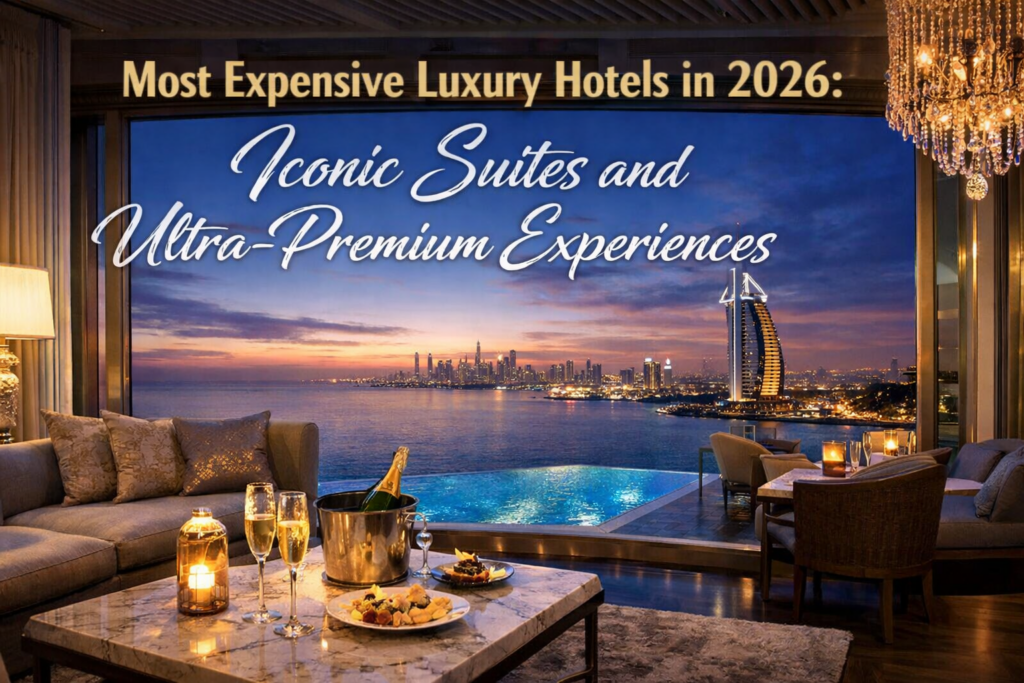
Luxury hotels in 2026 aren’t just places to sleep. They’re financial-grade experiences—like wearing a perfectly tailored suit made of service, privacy, and status most expensive luxury hotels. If you’ve ever wondered why some luxury hotel suites cost as much as a car (or a down payment on a house), the answer is simple: ultra-luxury travel pricing is built on scarcity, personalization, and access.
And in 2026, the most expensive luxury hotels are playing a new game. They’re not selling “rooms.” They’re selling iconic suites, private spaces, and ultra-premium experiences that make life feel cinematic. Think of it like stepping into a VIP universe where your time is protected, your comfort is engineered, and your identity is respected.
Let’s break down what makes the world’s most expensive luxury hotels so costly—and why some travelers happily pay five-figure nightly rates.
What “Most Expensive” Really Means in 2026 (most expensive luxury hotels)
In luxury travel, “expensive” doesn’t mean “overpriced.” It means strategically premium. The most expensive luxury hotels in 2026 command high rates because they bundle rare benefits you can’t easily buy elsewhere: absolute discretion, unmatched views, global brand prestige, and experiences that feel tailor-made.
Price vs. Value in ultra-luxury travel
Here’s the real truth: price is a number, value is an emotion. A luxury hotel rate becomes “worth it” when the experience removes friction from your life. No lines, awkward moments, and no stress. Just seamless comfort.
A five-star hotel might offer a beautiful room. A top-tier ultra-luxury hotel offers time control, privacy control, and experience control—the three things high-net-worth travelers protect most.
Why the “suite” is the new status symbol
In 2026, luxury travelers don’t just want prestige—they want space. The suite has become the new statement piece because it delivers:
- Privacy (separate living areas, private entrances, private elevators)
- Comfort (residential-style layouts, multiple bedrooms, dedicated staff)
- Power (it signals you’re in the top tier without needing to say a word)
A luxury hotel suite is basically the modern equivalent of a private club membership—except it comes with a view and a personal team.
How seasonality and events inflate luxury hotel rates
The most expensive luxury hotels don’t have one price. They have layers of price. Rates rise when demand peaks, especially during:
- global fashion weeks
- major sports events
- yacht shows
- festivals
- international summits
Peak-week premiums: fashion weeks, F1, yacht shows, and festivals
During peak weeks, luxury suites become like rare collectibles. If you want Monaco during F1, Paris during fashion week, or the Riviera during peak summer, the “base rate” becomes irrelevant. You’re paying for access, and access has a premium.
The New Definition of Ultra-Premium Experiences (most expensive luxury hotels)
Luxury in 2026 is shifting from “gold taps” to emotional precision. The best luxury hotels aren’t loud. They’re smart. They anticipate what you want before you ask, like a luxury concierge reading the room the way a great musician reads a crowd.
Hyper-personalized service: the “invisible butler” era
The new gold standard is service you barely notice—but you feel the benefit constantly. Your favorite tea appears without a request. You preferred pillow is already waiting. Your room temperature is tuned to your comfort pattern.
It’s not magic. It’s premium hospitality intelligence.
Privacy-first luxury: discreet entrances, private elevators, and hush protocols
The most expensive luxury hotels are built for people who value discretion. That includes:
- private check-in (in-suite or private lounge)
- private elevators
- discreet security coordination
- confidentiality culture among staff
If luxury is a stage, privacy-first hotels are the backstage pass where no cameras follow you.
Wellness as the new luxury currency
In 2026, wellness is not a “nice-to-have.” It’s a luxury requirement. High-end travelers want:
- sleep optimization
- recovery programs
- anti-stress spa rituals
- fitness routines that travel with them
Biohacking, longevity suites, and medical-grade spa programs
Some ultra-premium hotels now offer longevity-focused wellness programs that feel closer to a private retreat than a spa day. It’s the kind of luxury that doesn’t just make you feel good—it makes you feel better than before you arrived.
The Most Iconic Ultra-Expensive Suites You’ll See in 2026 (most expensive luxury hotels)
Let’s be clear: the most expensive luxury hotels in 2026 are not expensive because of furniture. They’re expensive because of:
- location dominance
- architecture scarcity
- view monopoly
- experience exclusivity
- service intensity
The penthouse suite playbook
A penthouse in a luxury hotel is like a crown in a jewelry store. It’s the symbolic pinnacle. Penthouse pricing is driven by:
- top-floor placement
- panoramic city or ocean views
- private terraces
- multiple bedrooms
- entertaining spaces
- private dining setups
- dedicated staff access
The private-villa-in-the-sky trend
More luxury hotels are building suites that feel like private mansions floating above the city. You’ll see:
- private pools
- in-suite gyms
- spa rooms
- cinema lounges
- office spaces for executive travel
This is especially attractive for business travelers who want a luxury hotel experience without losing productivity.
Underwater, overwater, and cliffside showstopper suites
The rarest suites are the ones that can’t be replicated easily:
- overwater villas with direct lagoon access
- cliffside villas with dramatic views
- secluded jungle villas with private decks
- designer suites integrated into natural landscapes
Luxury pricing spikes when nature becomes part of the architecture.
The role of architecture and view premiums in luxury pricing
Views are a form of non-replicable value. A luxury hotel suite that overlooks a landmark, a coastline, or a skyline is charging for something no competitor can “copy-paste.” In premium hospitality, the view is the billboard.
What’s Included at the Top End (most expensive luxury hotels)
The most expensive luxury hotels don’t just charge for a room. They often include (or can arrange) services that remove every travel inconvenience.
Private jets, chauffeured supercars, and yacht transfers (most expensive luxury hotels)
Ultra-luxury guests want frictionless arrivals. So luxury hotels often provide:
- private airport transfers
- luxury car fleets
- yacht docking coordination
- helicopter access (location dependent)
It’s less “transportation” and more “VIP choreography.”
Private chefs, Michelin-star dining, and in-suite tasting menus (most expensive luxury hotels)
High-end travelers want private dining without compromise. The best luxury hotels offer:
- chef’s table access
- curated wine pairings
- in-suite tasting menus
- bespoke dietary experiences
This is luxury dining that feels personal, not performative.
High-jewelry concierge and personal shoppers (most expensive luxury hotels)
Some luxury hotels offer shopping services with elite-level access:
- personal styling sessions
- boutique appointments
- limited-release items
- luxury brand partnerships
It’s retail therapy with a velvet rope.
Security, close protection, and confidentiality services (most expensive luxury hotels)
For some travelers, privacy is not a preference—it’s a necessity. Ultra-luxury hotels often coordinate discreet protection and confidentiality protocols, especially for celebrities, executives, and high-profile families.
Where the World’s Priciest Luxury Hotels Cluster (most expensive luxury hotels)
Luxury pricing isn’t random. The most expensive luxury hotels are concentrated in places where wealth, status, and scarcity collide.
Monaco, the French Riviera, and the Mediterranean elite circuit (most expensive luxury hotels)
This region thrives on high-season demand and elite cultural capital. The luxury hotel market here is built on glamour and scarcity.
Dubai, Abu Dhabi, and the Gulf’s ultra-luxury boom (most expensive luxury hotels)
The Gulf continues to push hospitality boundaries with bold architecture, premium service, and high-end shopping ecosystems.
London, Paris, and New York: legacy glamour with modern pricing (most expensive luxury hotels)
These cities combine history with modern luxury demand. Iconic addresses in these capitals can justify premium rates year-round.
Ski capitals and winter peaks: Aspen, St. Moritz, Courchevel (most expensive luxury hotels)
In winter luxury hotspots, luxury hotel rates rise sharply because the season is short, demand is intense, and the clientele expects elite service.
What Makes a Luxury Hotel “Iconic” (most expensive luxury hotels)
Iconic hotels are not just expensive—they’re culturally famous. They’re the kind of luxury hotel where the story matters as much as the suite.
Heritage, celebrity history, and cultural capital (most expensive luxury hotels)
When a luxury hotel is part of a city’s identity, it becomes a living landmark. That reputation becomes a pricing engine.
Award ecosystems: Forbes, Michelin Keys, and global rankings (most expensive luxury hotels)
Awards and ratings reinforce luxury brand trust, especially for travelers who want a “no-risk” premium booking.
Brand power: luxury groups vs. independent legends (most expensive luxury hotels)
Some travelers trust big luxury brands for consistency. Others chase independent icons for personality. Both can command premium pricing if executed properly.
Scarcity engineering: limited keys, limited suites, limited access (most expensive luxury hotels)
The most expensive luxury hotels stay expensive by being rare. When inventory is limited, demand stays hungry—and premium rates become sustainable.
Ultra-Premium Experiences That Justify Five-Figure Nights (most expensive luxury hotels)
Here’s where things get fun. Ultra-luxury travelers pay for experiences that feel impossible to arrange alone.
Private museum access and after-hours cultural tours
Imagine walking through a famous museum when it’s closed to the public. That’s the type of exclusive access that luxury hotels can unlock.
Personal performances and celebrity-level entertainment
Some hotels can arrange private performances, curated entertainment, or exclusive events tailored to your taste.
Once-in-a-lifetime culinary experiences
Think private dining in unusual locations, chef-led tastings, or unique culinary collaborations—crafted like a luxury product.
The role of partnerships with luxury fashion and watch maisons
Luxury hotels increasingly partner with premium brands to create exclusive experiences—private showings, limited collections, and bespoke services.
How to Book the Most Expensive Luxury Hotels in 2026 (most expensive luxury hotels)
Booking ultra-premium hotels is less like shopping and more like strategy.
The right time to book (and when not to)
If you’re targeting high-demand dates, book early. If you want flexibility and perks, avoid peak event windows.
VIP channels: luxury travel advisors and preferred partner programs
The best perks often come through premium booking channels that add benefits without reducing the “public rate.” That’s a smart luxury travel move.
Negotiating perks ethically without “discounting”
In luxury travel, “discounting” can reduce your priority. Instead, aim for value-add perks like:
- breakfast
- spa credits
- upgrades
- late check-out
- airport transfers
Best-value upgrades: how to turn spend into experiences
Sometimes the smartest upgrade is not a bigger room—it’s an experience upgrade: private dining, wellness sessions, or exclusive access.
Common Mistakes That Ruin Ultra-Luxury Stays (most expensive luxury hotels)
Luxury travel can be flawless—unless you sabotage it.
Choosing price over fit
The most expensive luxury hotel may not match your style. Some travelers love modern minimalism. Others want classic glamour. Choose what fits your personality.
Ignoring privacy and security considerations
If you value discretion, confirm privacy features before booking. Not every luxury hotel is designed for privacy-first guests.
Overpacking schedules and missing the point
Luxury should feel spacious. If you schedule every hour, you won’t enjoy the suite, the spa, or the service.
The “too much itinerary” trap for premium travelers
Think of your stay like a premium watch: it’s meant to be appreciated, not rushed.
Conclusion
The most expensive luxury hotels in 2026 aren’t competing on chandeliers and marble floors anymore. They’re competing on privacy, personalization, wellness, and exclusive access—the real premium currencies of modern luxury travel. When you book an iconic suite in an ultra-luxury hotel, you’re not just paying for space. You’re paying for a world where everything is smoother, quieter, safer, and more tailored to you. And honestly? For the right traveler, that kind of luxury doesn’t feel expensive—it feels inevitable.
FAQs
1) Why are the most expensive luxury hotels so costly in 2026?
Because premium pricing is driven by scarcity, privacy-first service, iconic locations, and ultra-personalized luxury experiences.
2) Are luxury hotel suites worth the money for business travelers?
Yes, many luxury suites offer productivity-friendly layouts, private meeting spaces, concierge support, and premium wellness for recovery.
3) What makes a luxury hotel “iconic”?
An iconic luxury hotel combines heritage, cultural influence, prime location, elite service, and a reputation that attracts global luxury travelers.
4) How can I get better value when booking luxury hotels?
Use preferred partner programs or luxury travel advisors to secure upgrades, credits, and VIP amenities without negotiating the public rate.
5) What should I prioritize when booking ultra-premium luxury hotels?
Prioritize privacy features, service quality, location, suite layout, wellness offerings, and experiences that match your personal travel style.