Introduction: Why Airline Safety Is the Most Important Factor in Global Travel
When travelers search for the safest airlines in the world, they are prioritizing the most critical aspect of aviation—safety, reliability, and trust. In an era where global travel is more accessible than ever, passengers are increasingly aware of airline safety standards, operational performance, and regulatory compliance. The concept of safe airlines worldwide goes far beyond accident statistics; it encompasses pilot training, aircraft maintenance, technological innovation, and strict adherence to international aviation standards.
The modern aviation industry has achieved remarkable safety levels, making air travel one of the safest modes of transportation. Airlines such as Qantas and Singapore Airlines are consistently for their exceptional safety records, rigorous training programs, and commitment to operational excellence. These airlines have built a reputation for reliability and trust, making them top choices for safety-conscious travelers.
Moreover, organizations like International Air Transport Association and Federal Aviation Administration play a crucial role in setting global safety standards. Their regulations ensure that airlines maintain high levels of safety across all operations.
What Defines the Safest Airlines in the World?
The safest airlines worldwide are evaluated based on a combination of factors that ensure passenger safety at every stage of the journey.
Accident History and Safety Records
One of the most important indicators of an airline’s safety is its historical performance. Airlines with minimal incidents and strong safety records are considered among the safest.
Pilot Training and Crew Expertise
Highly trained pilots and crew members are essential for maintaining safety. Airlines invest heavily in training programs to ensure that their staff can handle various situations effectively.
Aircraft Maintenance and Fleet Modernization
Modern aircraft equipped with advanced safety features significantly reduce risks. Airlines that maintain their fleets regularly and invest in new technology are more likely to achieve higher safety ratings.
Regulatory Compliance and Certifications
Compliance with international safety standards is crucial. Airlines must adhere to strict regulations set by aviation authorities to ensure safe operations.
Top Safest Airlines in the World


5
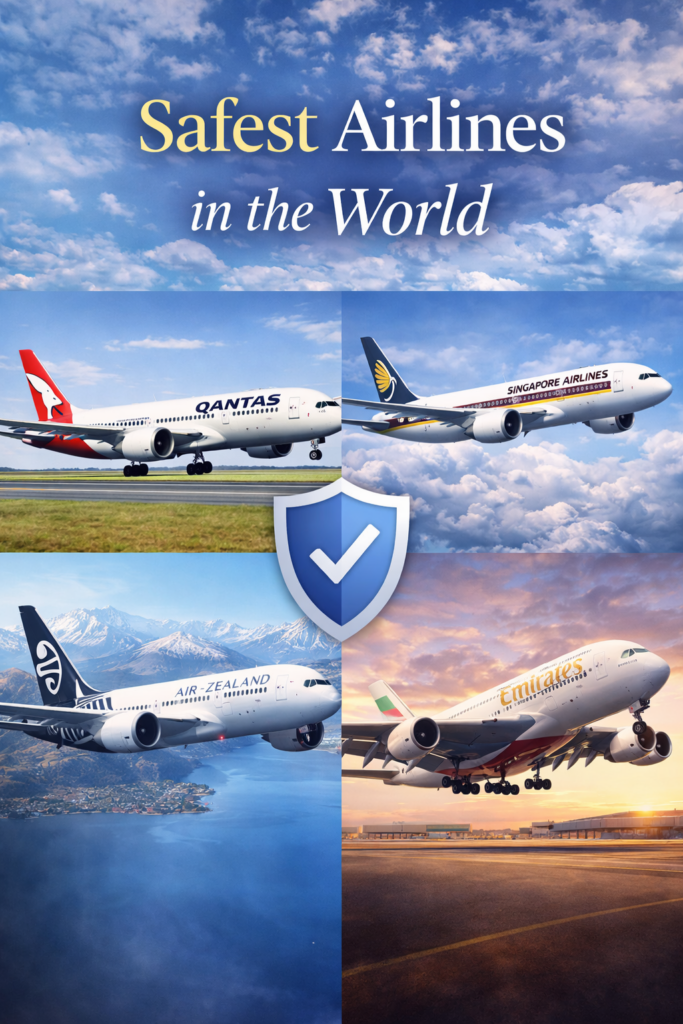
Qantas – The Benchmark for Airline Safety
The Qantas is widely regarded as one of the safest airlines in the world, thanks to its exceptional safety record and commitment to innovation. With decades of incident-free operations, Qantas has set the standard for aviation safety.
Singapore Airlines – Excellence in Safety and Service
The Singapore Airlines combines world-class service with rigorous safety standards. Its focus on training and technology ensures a safe and comfortable journey for passengers.
Air New Zealand – Innovation and Reliability
The Air New Zealand is known for its innovative approach to safety and operational excellence. Its modern fleet and strong safety culture make it a top choice.
Emirates – Advanced Technology and Global Standards
The Emirates invests heavily in technology and training, ensuring high safety standards across its operations.
Key Safety Features of Top Airlines
Advanced Aircraft Technology
Modern aircraft are equipped with cutting-edge safety systems, including collision avoidance and automated controls.
Strict Maintenance Protocols
Regular maintenance checks ensure that aircraft remain in optimal condition.
Real-Time Monitoring Systems
Airlines use advanced monitoring systems to track performance and identify potential issues.
Comparison Table: Safest Airlines
| Airline | Region | Safety Strength | Notable Feature |
|---|---|---|---|
| Qantas | Australia | Strong safety record | Advanced training |
| Singapore Airlines | Asia | Service and safety | Modern fleet |
| Air New Zealand | Oceania | Innovation | Efficient operations |
| Emirates | Middle East | Technology | Global standards |
Why Airline Safety Matters More Than Ever
In today’s interconnected world, airline safety is more important than ever. With millions of passengers traveling daily, maintaining high safety standards is essential for ensuring trust and reliability.
Future Trends in Aviation Safety
The future of safe airlines worldwide is driven by innovation and technology. Artificial intelligence, predictive maintenance, and advanced analytics are transforming the industry.
How to Choose the Safest Airline
Travelers can choose the safest airline by researching safety records, certifications, and reviews. Understanding these factors can help make informed decisions.
Conclusion: Trusting the Safest Airlines for Peace of Mind
The safest airlines in the world represent the highest standards of aviation excellence. By prioritizing safety, innovation, and reliability, these airlines ensure that passengers can travel with confidence.
FAQs
1. What is the safest airline in the world?
Qantas is often ranked as one of the safest airlines globally.
2. Are all airlines safe?
Most airlines meet strict safety standards, but some rank higher than others.
3. How are airline safety rankings?
They are based on accident history, training, and compliance.
4. Is flying safer than other transportation?
Yes, air travel is one of the safest modes of transportation.
5. How can I check an airline’s safety?
You can review ratings and certifications from aviation authorities.